Written and medically reviewed by Dr. Vinay Jacob, MS, MCh, DNB
Member, Association of Plastic Surgeons of India (APSI)
Medical review: February 16, 2026 | Last updated: February 16, 2026 | Editorial policy
Introduction
Hair loss can feel more noticeable after 40. You may see thinning at the crown, a receding hairline, or reduced density overall. At this stage of life, many people wonder: Is it too late for a hair transplant?
The good news is that age alone does not disqualify you from getting great results. In fact, many patients over 40 are ideal candidates. In this blog, you will learn how hair transplants work after 40, what factors matter most, expected results, risks, recovery, and how to decide if this procedure is right for you.
Understanding Hair Loss After 40

Hair loss after 40 is usually linked to genetics and hormonal changes. For men, male pattern baldness (androgenetic alopecia) is common. For women, thinning often appears along the part line or crown.
Why hair loss stabilizes after 40
By your 40s, your pattern of hair loss is often more predictable. This is important because:
- The surgeon can better design a long-term hairline.
- Future hair loss can be estimated more accurately.
- There is less risk of needing frequent corrective procedures.
If you are younger, your hair loss pattern may still be evolving. After 40, your condition is usually more stable, which can actually make planning easier.
Is a Hair Transplant Effective After 40?
Yes, hair transplants can be very effective after 40. The procedure does not depend on age as much as it depends on the quality of your donor hair and overall health.
How it works
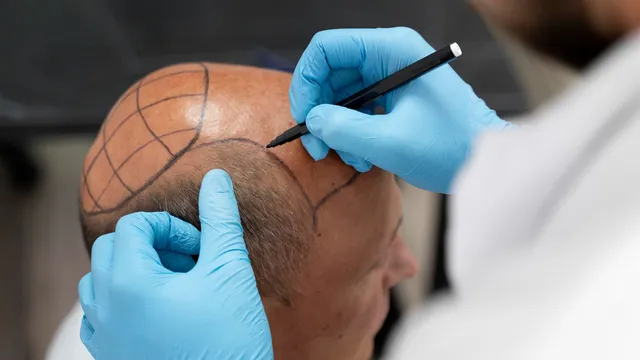
In a hair transplant, healthy hair follicles are taken from the back or sides of your scalp (the donor area) and implanted into thinning or bald areas. These transplanted hairs are resistant to hair loss and usually grow for a lifetime.
What influences success
- Donor hair density: You need enough healthy follicles in the donor area.
- Scalp condition: Healthy skin improves healing and growth.
- Medical health: Conditions like diabetes or thyroid disorders should be controlled.
- Realistic expectations: Understanding what can and cannot be achieved is key.
Patients in their 40s, 50s, and even 60s often achieve natural-looking results when these factors are favorable.
Types of Hair Transplant Techniques
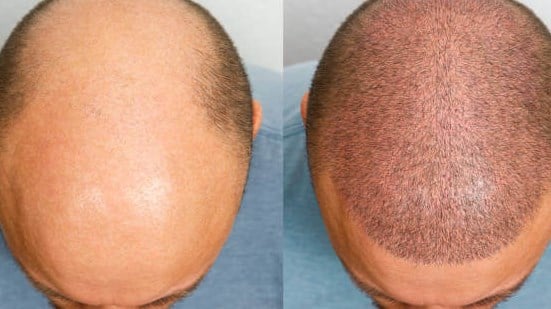
The two most common methods are FUE and FUT.
FUE (Follicular Unit Extraction)
- Individual follicles are removed one by one.
- Minimal scarring.
- Faster recovery time.
- Suitable for shorter hairstyles.
FUT (Follicular Unit Transplantation)
- A strip of scalp is removed and dissected into grafts.
- May yield more grafts in a single session.
- Leaves a linear scar.
After 40, both techniques can work well. The best choice depends on your hair type, degree of baldness, and personal preference.
Benefits of Getting a Hair Transplant After 40
Many people assume that younger patients get better results. That is not always true. In fact, there are unique advantages to undergoing the procedure later in life.
1. Mature hairline design
A surgeon can create a natural, age-appropriate hairline. Trying to restore a teenage hairline at 45 can look unnatural. A balanced design enhances your features without making it obvious that you had surgery.
2. Emotional readiness
By 40, you often have clearer expectations. You are less likely to make impulsive decisions and more likely to commit to proper aftercare.
3. Stable lifestyle
A stable routine helps during recovery. You can plan time off work and follow post-procedure instructions carefully.
4. Long-term satisfaction
Many patients report improved self-confidence in professional and social settings after restoring their hair.
Are There Any Risks After 40?
The risks of hair transplant surgery are generally low when performed by a qualified surgeon. Age alone does not significantly increase risk, but health factors do matter.
Possible risks include:
- Temporary swelling
- Mild discomfort
- Infection (rare)
- Shock loss (temporary shedding of nearby hair)
If you have high blood pressure, diabetes, or heart conditions, you must inform your surgeon. A thorough medical evaluation ensures the procedure is safe for you.
Most healthy individuals over 40 tolerate the procedure very well.
What Results Can You Expect?
Understanding the timeline helps manage expectations.
Timeline of growth
- First 2 weeks: Mild scabbing and redness.
- 2–8 weeks: Transplanted hair may shed (this is normal).
- 3–4 months: New hair begins to grow.
- 6–9 months: Noticeable improvement in density.
- 12 months: Final results are usually visible.
The transplanted hair grows naturally. You can cut, style, and wash it as you normally would.
Keep in mind that a hair transplant improves density but does not create unlimited hair. If you have extensive baldness, more than one session may be required.
Is It Worth It Financially After 40?
A common question is whether it is “worth it” at this stage of life.
Think about it this way:
- You may have 30–40 active professional and social years ahead of you.
- The results are long-lasting.
- Ongoing expenses for temporary solutions (wigs, sprays, medications) can add up over time.
A well-planned hair transplant is often a one-time investment that provides lasting benefits.
Introduction to the Doctors
When considering a hair transplant after 40, choosing the right surgeon is crucial.
Dr. Vinay Jacob is skilled plastic surgeons with years of international experience. They specialize in hair transplant procedures along with liposuction, tummy tuck, rhinoplasty, facelift, breast augmentation, gynecomastia, and more.
Their approach focuses on safety, precision, and natural-looking outcomes. With advanced facilities and a strong patient-centered philosophy, they ensure you feel informed, comfortable, and confident at every step of your journey.
Their experience in aesthetic surgery allows them to design hairlines that complement your facial structure and age, ensuring results that look natural rather than artificial.
FAQs
1. Am I too old for a hair transplant at 45 or 50?
No, you are not too old. Many patients in their 40s and 50s are ideal candidates. Your overall health and donor hair quality matter more than your age.
2. Will the transplanted hair fall out again?
Transplanted hair is usually taken from areas resistant to hair loss. These hairs typically continue to grow for a lifetime. However, non-transplanted hair may continue to thin over time.
3. Is the procedure painful?
The procedure is done under local anesthesia. You may feel mild discomfort, but most patients describe it as tolerable. Recovery discomfort is usually minimal and short-lived.
4. How long do I need to take off work?
Most people return to work within 3 to 7 days, depending on the type of procedure and their comfort level.
5. Can women over 40 get a hair transplant?
Yes. Women with stable hair thinning and sufficient donor hair can benefit from hair transplant surgery. A consultation helps determine eligibility.
Conclusion
A hair transplant after 40 can be highly effective when planned carefully and performed by experienced surgeons. Age is not the limiting factor—your health, donor hair, and realistic expectations are what truly matter. If you are concerned about thinning hair and want a long-term solution, consulting a qualified professional can help you understand your options. With proper guidance and care, you can restore not just your hair, but also your confidence and sense of control over your appearance.
Why consider Dr. Vinay Jacob for this treatment?
Dr. Vinay Jacob is a senior plastic and reconstructive surgeon with MS, MCh and DNB qualifications and international training. His plastic-surgery training supports careful assessment of hair-loss patterns, donor areas, and natural-looking restoration planning.
Learn more about hair restoration services at The Plastic Surgeons. Read related guidance: Laser Hair Removal for Sensitive Areas: Safety Tips & Precautions and Hair Transplant for Male Pattern Baldness.