Written and medically reviewed by Dr. Vinay Jacob, MS, MCh, DNB
Member, Indian Association of Aesthetic Plastic Surgeons (IAAPS)
Last reviewed and updated: August 13, 2026 | Editorial policy
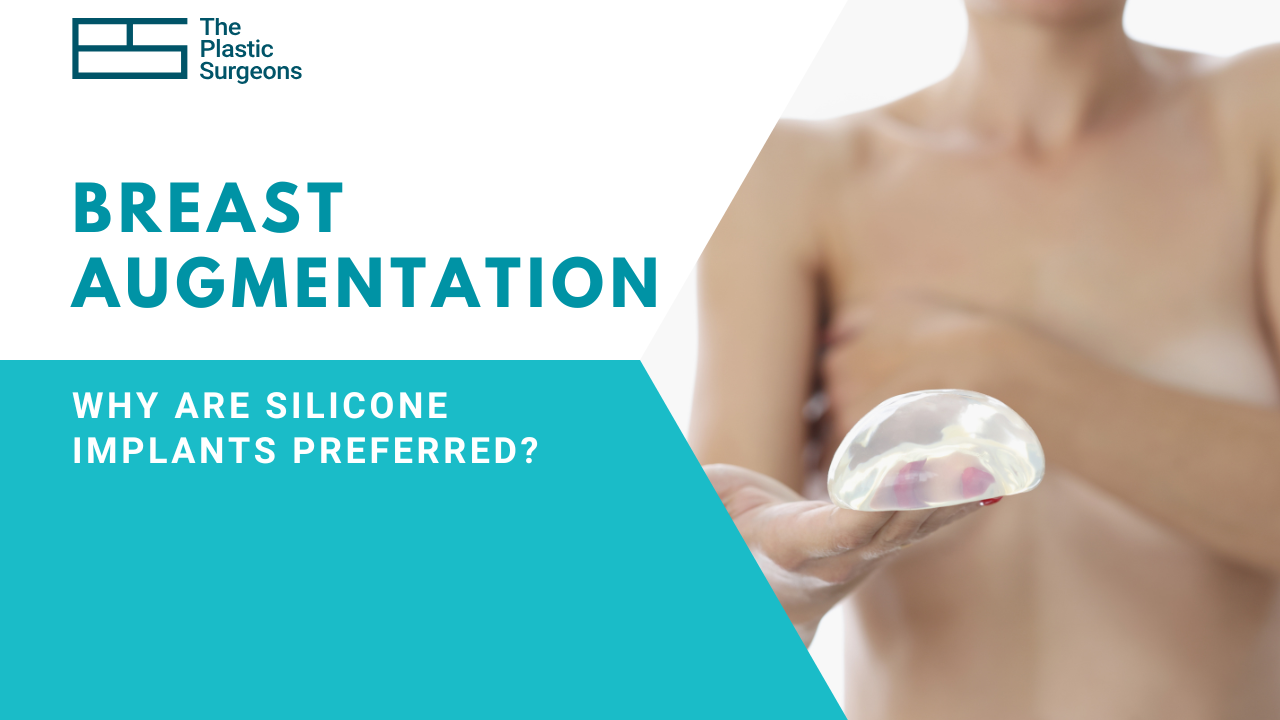
Silicone breast implants are often preferred because cohesive gel can feel closer to natural breast tissue and may show less rippling than saline. Preference does not mean they are automatically safer or suitable for every patient. This guide focuses only on the reasons silicone is commonly chosen and the limitations that should be considered.
Why silicone implants are commonly selected
1. A softer, more tissue-like feel
Cohesive silicone gel generally feels softer than saline. This can matter when a patient has limited natural breast tissue covering the implant.
2. Less visible rippling in many patients
Silicone gel usually wrinkles less visibly than saline, although rippling can still occur. Implant width, profile, placement and tissue thickness also affect visibility.
3. A broad choice of dimensions and gel cohesiveness
Silicone implants are available in multiple widths, projections and gel consistencies. This allows the surgeon to match the implant to chest dimensions rather than choosing by volume alone.
4. Shape retention
Modern cohesive gels are designed to retain form. The result still depends on surgical technique, healing, skin elasticity and future changes such as pregnancy, ageing or weight fluctuation.
Important limitations
- A rupture may be silent and may require imaging to detect.
- Silicone implants are not lifetime devices and revision surgery may eventually be necessary.
- Capsular contracture, displacement, infection, pain and sensation changes can occur.
- A natural result is not guaranteed by implant material alone.
Who may benefit most?
Silicone may be considered when the priorities are a natural feel, softer edges and reduced visible rippling, particularly where tissue coverage is limited. Suitability must be assessed individually; implant size and placement can be as important as the filling.
Questions to ask during consultation
- Which width and profile match my chest?
- Would placement above or below the muscle provide better coverage?
- What follow-up and imaging will I need?
- How would rupture, capsular contracture or future revision be managed?
For an objective comparison before choosing, read saline vs silicone breast implants. For a personalized decision framework, read are silicone implants better than saline? Then review the breast implant service page.
Why consult Dr. Vinay Jacob?
Dr. Vinay Jacob is a plastic and reconstructive surgeon with MS, MCh and DNB qualifications and experience in aesthetic breast surgery and breast reconstruction. Implant selection requires an examination of breast tissue, chest width, skin quality and personal goals.
See the breast implant service page or Dr. Vinay Jacob’s profile.