Written and medically reviewed by Dr. Vinay Jacob, MS, MCh, DNB
Member, Indian Association of Aesthetic Plastic Surgeons (IAAPS)
Last reviewed and updated: August 13, 2026 | Editorial policy
Short answer: silicone breast implants are not universally “better” than saline implants. Silicone is often selected when a natural feel and less visible rippling are priorities. Saline may suit someone who values a smaller insertion incision or wants a rupture to be immediately noticeable. The right choice depends on anatomy, goals and willingness to follow long-term monitoring advice.
When may silicone be the better fit?
- You have limited natural breast-tissue coverage and want softer implant edges.
- A natural feel and reduced likelihood of visible rippling are high priorities.
- You are comfortable following the recommended clinical and imaging follow-up for silicone implants.
When may saline be worth considering?
- You prefer an implant inserted empty and filled after placement, which can permit a smaller incision in some cases.
- You want implant deflation to be visually apparent if the shell ruptures.
- Your surgeon believes your tissue coverage can adequately conceal a saline implant.
Decision factors that matter more than a general verdict
Breast tissue and skin thickness
People with thinner tissue may be more likely to see or feel implant edges and rippling. Implant placement, size and profile also influence this—not only the filling material.
Desired feel and shape
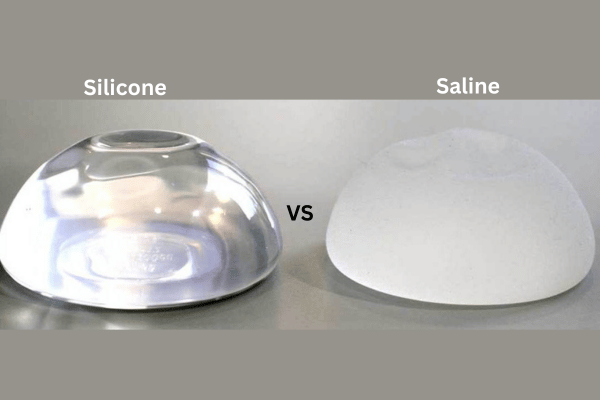
Cohesive silicone gel generally feels closer to breast tissue, while saline can feel firmer. Neither material guarantees a particular appearance; the surgical plan and the patient’s starting anatomy remain important.
What happens after a rupture?
A saline rupture normally causes visible deflation as the sterile saltwater is absorbed. A silicone rupture can be “silent,” so examination and imaging may be needed. Current follow-up should be discussed with your surgeon and based on applicable implant-manufacturer and regulatory guidance.
Safety and future surgery
Both implant types carry risks including capsular contracture, infection, changes in sensation, asymmetry and possible future revision. Breast implants are not lifetime devices.
Bottom line
Silicone may be the preferred option for natural feel and lower rippling visibility, but “better” must mean better for a particular patient. A consultation should compare implant material together with size, profile, surface, placement and the amount of existing tissue.
Next: review the side-by-side differences between saline and silicone implants, then visit the breast implant treatment page for consultation information.
Why consult Dr. Vinay Jacob?
Dr. Vinay Jacob is a plastic and reconstructive surgeon with MS, MCh and DNB qualifications and experience in aesthetic breast surgery and breast reconstruction. Implant selection requires an examination of breast tissue, chest width, skin quality and personal goals.
See the breast implant service page or Dr. Vinay Jacob’s profile.