A diabetic foot ulcer is more than just a wound on the foot. If it is not identified and treated appropriately, it can become infected, involve deeper tissues, and in severe cases contribute to tissue death or gangrene. When a serious infection or irreversible tissue damage cannot be safely controlled, amputation may sometimes become necessary to protect the person’s health and prevent a life-threatening infection from spreading.
However, developing a diabetic foot ulcer does not automatically mean that amputation will be required. Early recognition, appropriate wound care, pressure relief, infection management, assessment of blood circulation, and regular diabetic foot checks can all play an important role in reducing the risk of severe complications. Current international diabetic-foot guidelines emphasise prevention and multidisciplinary management to reduce diabetes-related lower-extremity amputations.
Understanding how a diabetic foot ulcer can progress to amputation can help people recognise warning signs and seek treatment before the problem becomes more difficult to manage.
What Is a Diabetic Foot Ulcer?
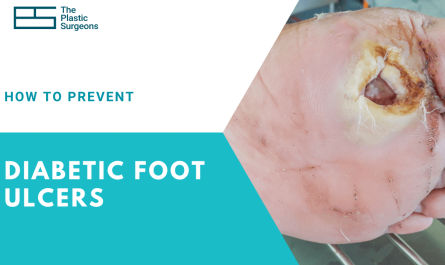
A diabetic foot ulcer is an open wound that develops on the foot in a person with diabetes. It commonly occurs on areas exposed to repeated pressure or friction, although ulcers can develop in other locations as well.
An ulcer may begin with something that seems relatively minor, such as:
- A blister
- A small cut
- A crack in the skin
- A callus
- An ingrown toenail
- Pressure from tight footwear
- Repeated friction
- A minor injury
- A burn
- An area of excessive pressure caused by a foot deformity
The problem is that diabetes can affect both sensation and circulation, making these injuries easier to miss and harder to heal.
How Does a Diabetic Foot Ulcer Progress to Amputation?
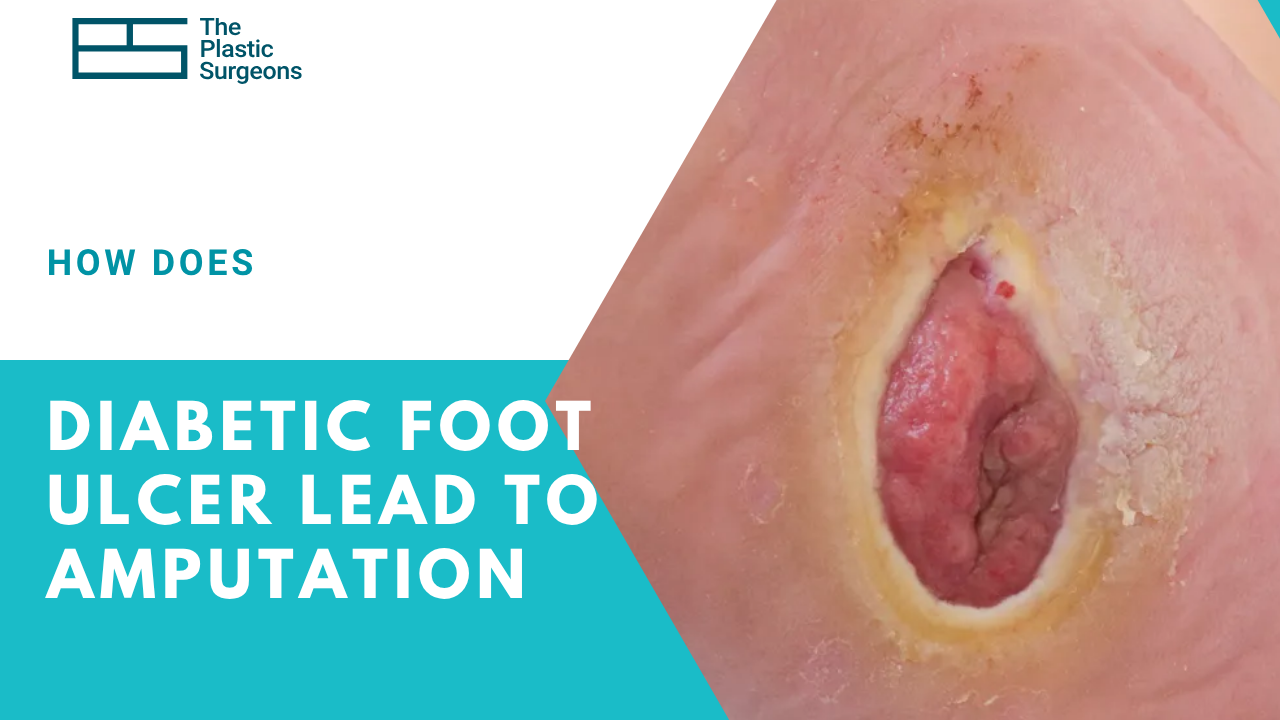
Amputation usually occurs at the end of a chain of complications rather than because of the ulcer alone.
A simplified progression may look like this:
Minor injury → unnoticed wound → persistent pressure → ulcer → infection → deeper tissue involvement → tissue death/gangrene → possible amputation
This progression does not happen in every person with a diabetic foot ulcer. In many cases, timely treatment can stop the process much earlier.
Let’s look at each stage.
1. A Small Injury Occurs
The process may start with a very small injury.
For example, a person may develop a blister from a new pair of shoes. Someone else may step on a small object or develop a crack in dry skin.
In a person with normal sensation, pain may prompt them to stop walking or inspect the area.
With diabetic neuropathy, that warning system may not work properly.
2. Neuropathy Allows the Injury to Go Unnoticed
Diabetic peripheral neuropathy can reduce protective sensation in the feet.
This means a person may not notice:
- A blister
- A cut
- A burn
- A foreign object inside the shoe
- Excessive pressure
- A developing ulcer
NIDDK notes that loss of sensation can allow foot injuries to go unnoticed and progress to sores or infections.
The person may continue walking normally, placing pressure on the injured area every day.
3. Repeated Pressure Enlarges the Wound
Walking repeatedly on an injured area can prevent the skin from recovering.
Pressure can be particularly problematic when there is:
- Neuropathy
- A foot deformity
- Poorly fitting footwear
- Abnormal pressure distribution
- A previous ulcer
- A callus over the affected area
The original injury may therefore become larger or deeper.
For plantar diabetic foot ulcers, appropriate offloading is a key part of treatment because reducing mechanical stress helps create conditions for healing.
4. Poor Blood Flow Can Delay Healing
Diabetes is associated with peripheral arterial disease (PAD), which can reduce blood flow to the foot.
Healthy circulation is important because blood delivers oxygen and nutrients to tissues and supports the body’s ability to respond to infection.
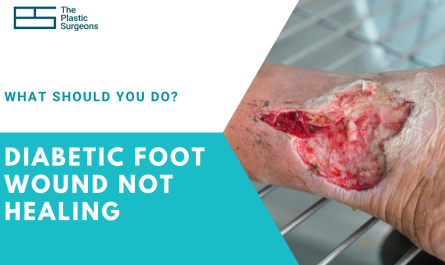
When circulation is significantly impaired, a wound may heal slowly or fail to heal.
NIDDK explains that reduced blood flow can make diabetic foot sores and infections harder to heal.
This is why a non-healing ulcer should prompt consideration of circulation problems rather than simply repeated dressing changes.
5. The Ulcer Can Become Infected
An open ulcer creates a break in the skin’s protective barrier.
Bacteria can enter the wound and cause an infection.
Signs that may suggest infection include:
- Increasing redness
- Warmth around the wound
- Swelling
- Increasing drainage
- Pus
- Unpleasant odour
- Increasing tenderness
- Worsening wound appearance
- Fever or feeling unwell in more serious cases
However, pain may be less noticeable in people with diabetic neuropathy.
A person should therefore not assume that an ulcer is safe simply because it does not hurt.
6. Infection Can Spread Into Deeper Tissues
A superficial infection may remain limited to the skin and soft tissues, but more serious infections can extend deeper.
Depending on the situation, infection may involve:
- Subcutaneous tissue
- Tendons
- Muscles
- Joints
- Bone
Deep infection can make treatment more complicated and may require hospital-based care, intravenous antibiotics, surgical treatment, or other specialist interventions.
The longer a serious infection remains untreated, the greater the risk of tissue damage and systemic illness.
7. Tissue Can Become Damaged or Die
Severe infection and inadequate blood supply can contribute to tissue death.
Dead tissue cannot heal normally and can become a site for further infection.
In severe cases, this can result in gangrene.
NIDDK notes that severe infection or gangrene may ultimately require amputation when tissue cannot be saved or infection must be prevented from spreading.
8. Amputation May Become Necessary
Amputation is generally considered when the affected tissue cannot be safely preserved or when removing the diseased portion is necessary to control a serious infection and protect the person’s health.
Depending on the extent of disease, this could involve:
- Removal of a toe
- Removal of part of the foot
- A below-knee amputation
- A more extensive leg amputation
The goal is not simply to remove a body part. In severe cases, amputation may be performed to remove infected or non-viable tissue and prevent a dangerous infection from spreading.
Importantly, amputation is not the inevitable outcome of a diabetic foot ulcer. The earlier the ulcer and its underlying causes are identified and treated, the more opportunity there may be to prevent progression.
Why Are Some People With Diabetes at Higher Risk of Amputation?
Not everyone with diabetes has the same risk.
Certain factors can make serious foot complications more likely.
Diabetic Neuropathy
Loss of protective sensation means injuries may go unnoticed.
Neuropathy is therefore an important risk factor for foot ulceration.
Peripheral Arterial Disease
Poor circulation can interfere with wound healing and the body’s ability to fight infection.
Previous Foot Ulcer
A history of a previous ulcer indicates a higher-risk foot and requires ongoing preventive care.
Previous Amputation
People who have already undergone a diabetes-related amputation require particularly careful ongoing foot surveillance. IWGDF prevention guidance specifically includes previous ulceration and lower-extremity amputation among factors considered during risk assessment.
Foot Deformity
Changes in foot structure can create abnormal pressure points.
Charcot foot, for example, can cause structural changes that increase the risk of ulceration.
Infection
An infected ulcer can deteriorate much more quickly than an uncomplicated wound.
Kidney Disease and Other Health Problems
People with significant diabetes-related complications or other major health conditions may have a higher risk of difficult-to-heal foot wounds and poor outcomes.
Delayed Medical Attention
Waiting until a wound becomes large, foul-smelling, black, or severely infected can make treatment much more difficult.
Early assessment is one of the most important opportunities to prevent progression.
What Are the Warning Signs of a High-Risk Diabetic Foot Ulcer?
Contact a healthcare professional promptly if you notice:
- A foot ulcer that is not healing
- Increasing redness
- Increasing warmth
- Swelling
- Pus or drainage
- A foul smell
- Increasing wound size
- Skin becoming dark, blue, grey, or black
- New or worsening pain
- New numbness
- Fever
- Chills
- Feeling unusually weak or unwell
- A sudden change in foot shape
- A hot, red, swollen foot
A black, foul-smelling wound may indicate severe infection or gangrene and requires urgent medical attention.
Can a Diabetic Foot Ulcer Be Treated Without Amputation?
In many cases, yes.
Treatment depends on the ulcer’s depth, infection status, circulation, pressure on the wound, tissue condition, and overall health.
Management may include:
Wound Care
The wound may require professional cleaning, dressings, monitoring, and debridement when appropriate.
Offloading
Reducing pressure on the ulcer is essential, particularly for ulcers caused or aggravated by repetitive mechanical stress.
Appropriate offloading can help create better conditions for wound healing and reduce the risk of complications.
Infection Treatment
If an infection is present, treatment is selected according to its severity and clinical findings.
More serious infections may require hospitalisation and surgical management.
Circulation Assessment
When an ulcer is not healing as expected, clinicians may need to assess whether poor arterial blood flow is contributing to the problem.
Treating significant vascular disease may be an important part of limb-preservation care.
Diabetes Management
Good diabetes management is an important part of overall foot health.
Blood glucose management should be individualised according to the person’s diabetes treatment plan and medical condition.
Treatment of Foot Deformity
If an abnormal foot structure is creating repeated pressure, addressing the underlying mechanical problem may help reduce the risk of recurrent ulceration.
Can Surgery Help Save a Foot From Amputation?
Surgery does not always mean amputation.
Depending on the problem, surgical treatment may sometimes be used to:
- Remove infected or dead tissue
- Drain an abscess
- Treat deeper infection
- Reduce pressure on an ulcer
- Correct a structural problem
- Improve wound coverage
- Address tissue loss
- Support limb-preservation treatment
The appropriate procedure depends on the location and severity of the wound and the patient’s circulation, infection status, overall health, and functional needs.
What Is the Role of Reconstructive Surgery?
Some diabetic foot ulcers create substantial tissue defects after infection or removal of damaged tissue.
In such cases, reconstructive surgery may help provide durable soft-tissue coverage when simpler wound-care approaches are not sufficient.
Depending on the defect, reconstruction may involve techniques such as:
- Local tissue rearrangement
- Skin grafting
- Regional flaps
- More complex flap reconstruction
Not every diabetic foot wound needs reconstruction.
Before considering reconstructive surgery, important factors such as infection control, blood supply, wound bed quality, pressure, and the patient’s ability to protect the reconstructed area need to be evaluated.
The objective is not merely to close the wound. A successful reconstruction should aim to provide durable coverage while supporting function and reducing the risk of recurrent breakdown.
What Can You Do to Reduce the Risk of Diabetic Foot Amputation?
Prevention begins long before a serious ulcer develops.
Check Your Feet Every Day
Look for:
- Cuts
- Blisters
- Redness
- Swelling
- Calluses
- Cracks
- Skin colour changes
- Warm areas
- New wounds
- Changes in foot shape
Daily inspection is particularly important when sensation is reduced.
Never Ignore a Small Wound
A small cut may be the beginning of a larger problem.
Monitor it closely and seek medical advice if it does not begin to heal or develops concerning changes.
Wear Appropriate Footwear
Properly fitting footwear can reduce friction and pressure.
People at higher risk of foot ulceration may require professionally recommended therapeutic or protective footwear.
Avoid Walking Barefoot
Walking barefoot increases exposure to injuries, burns, sharp objects, and pressure-related trauma.
Manage Calluses Safely
Do not cut calluses yourself or use aggressive chemical products without professional advice.
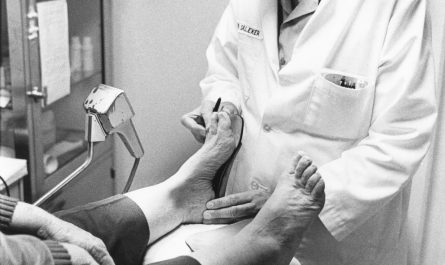
Attend Regular Foot Examinations
People with diabetes should have regular foot assessments, with frequency based on their individual risk profile.
IWGDF guidance recommends annual screening and more detailed assessment for people with risk factors such as loss of protective sensation or peripheral arterial disease.
Manage Blood Glucose and Other Risk Factors
Follow the diabetes management plan recommended by your healthcare team.
Blood pressure, cholesterol, smoking, kidney health, nutrition, and vascular health may also be relevant to overall foot health.
Seek Help Early
Do not wait until an ulcer becomes deep, infected, or black before seeking treatment.
Early intervention offers a better opportunity to address the cause before complications become severe.
What Should You Do If You Already Have a Diabetic Foot Ulcer?
If you already have an ulcer, do not attempt to manage a persistent or worsening wound entirely on your own.
A healthcare professional may need to determine:
- How deep the ulcer is
- Whether infection is present
- Whether bone or deeper structures are involved
- Whether blood flow is adequate
- Whether pressure is preventing healing
- Whether neuropathy is present
- Whether the foot has a structural deformity
- Whether specialised wound or reconstructive treatment is required
The treatment plan should address the cause of the ulcer, not just the visible wound.
Does Every Diabetic Foot Ulcer Lead to Amputation?
No.
This is an important distinction.
A diabetic foot ulcer increases the risk of serious complications, but an ulcer does not automatically mean that amputation will occur.
Many ulcers can be managed with appropriate wound care, pressure relief, infection treatment, circulation assessment, diabetes management, and other targeted interventions.
The risk becomes more concerning when an ulcer is neglected, infected, associated with severe circulation problems, or progresses to extensive tissue damage.
Current international guidance focuses on preventing ulcers and providing coordinated, multidisciplinary management of diabetes-related foot disease to reduce the risk of lower-extremity amputation.
Frequently Asked Questions
How does a diabetic foot ulcer lead to amputation?
A diabetic foot ulcer can progress from a small wound to infection, deeper tissue damage, gangrene, and irreversible tissue loss. If the affected tissue cannot be safely preserved or infection poses a serious threat, amputation may become necessary.
Is amputation always necessary for a diabetic foot ulcer?
No. Many diabetic foot ulcers can be treated without amputation. Early wound care, pressure relief, infection treatment, circulation assessment, and management of underlying risk factors can help reduce the risk of progression.
What are the first signs that a diabetic foot ulcer is getting worse?
Increasing redness, warmth, swelling, drainage, pus, foul odour, wound enlargement, skin colour changes, or fever can indicate worsening disease. A sudden change in the foot should be assessed promptly.
Can poor circulation cause a diabetic foot ulcer to become dangerous?
Yes. Reduced blood flow can impair oxygen and nutrient delivery and make it harder for a wound or infection to heal. Peripheral arterial disease is therefore an important factor in diabetic foot ulcer assessment.
Can diabetic neuropathy increase amputation risk?
Neuropathy can increase the risk indirectly because reduced sensation may allow injuries and ulcers to go unnoticed. Without early treatment, the wound can worsen and become infected.
Can surgery save a diabetic foot from amputation?
In selected cases, surgery may help control infection, remove damaged tissue, reduce pressure, or provide wound coverage. Whether limb-salvage surgery is appropriate depends on the individual wound, circulation, infection, tissue condition, and overall health.
When should I seek urgent medical care?
Seek urgent medical attention if a diabetic foot ulcer is rapidly worsening, associated with spreading redness or significant swelling, produces pus or a foul smell, develops black or severely discoloured tissue, or is accompanied by fever or significant illness.
For clinical information, visit our diabetic foot treatment page, review lower-limb reconstruction, or contact the clinic.
Dr. Vinay Jacob and Complex Diabetic Foot Reconstruction
Dr. Vinay Jacob is a plastic and reconstructive surgeon with experience in complex wound reconstruction.
When a diabetic foot wound has resulted in significant soft-tissue loss, reconstructive surgery may be considered as part of a multidisciplinary limb-preservation approach.
The exact treatment depends on the wound’s size and depth, infection status, circulation, exposed structures, tissue quality, pressure distribution, and overall medical condition.
The aim of reconstruction, when appropriate, is to provide durable tissue coverage and support the best possible functional outcome—not simply to close the wound.
If you or a family member has a diabetic foot ulcer that is not healing, becoming infected, or associated with significant tissue loss, seeking specialist assessment early may help determine whether limb-preserving treatment is possible.
Conclusion
A diabetic foot ulcer can lead to amputation when complications such as severe infection, gangrene, extensive tissue damage, or inadequate blood supply make it impossible or unsafe to preserve the affected tissue.
However, a diabetic foot ulcer does not automatically mean amputation is inevitable.
The most important steps are early recognition, appropriate wound care, pressure relief, infection management, circulation assessment, diabetes management, and regular monitoring. NIDDK and IWGDF guidance both emphasise prevention and early management of diabetic foot disease because timely care can reduce the risk of severe complications.
If you have diabetes and notice a new wound, ulcer, swelling, redness, warmth, drainage, or change in the appearance of your foot, do not wait for the problem to become painful or severe. Diabetic neuropathy can mask important symptoms, making regular visual inspection and early professional assessment especially important.
Sources: NIDDK: Diabetes & Foot Problems, American Diabetes Association: Foot Complications, and CDC: Preventing Diabetes-Related Amputations.
Medical Disclaimer: This article is intended for general educational purposes and does not replace an in-person medical examination, diagnosis, or personalised treatment plan. Anyone with diabetes and a new, worsening, infected, or non-healing foot wound should seek appropriate medical care promptly.