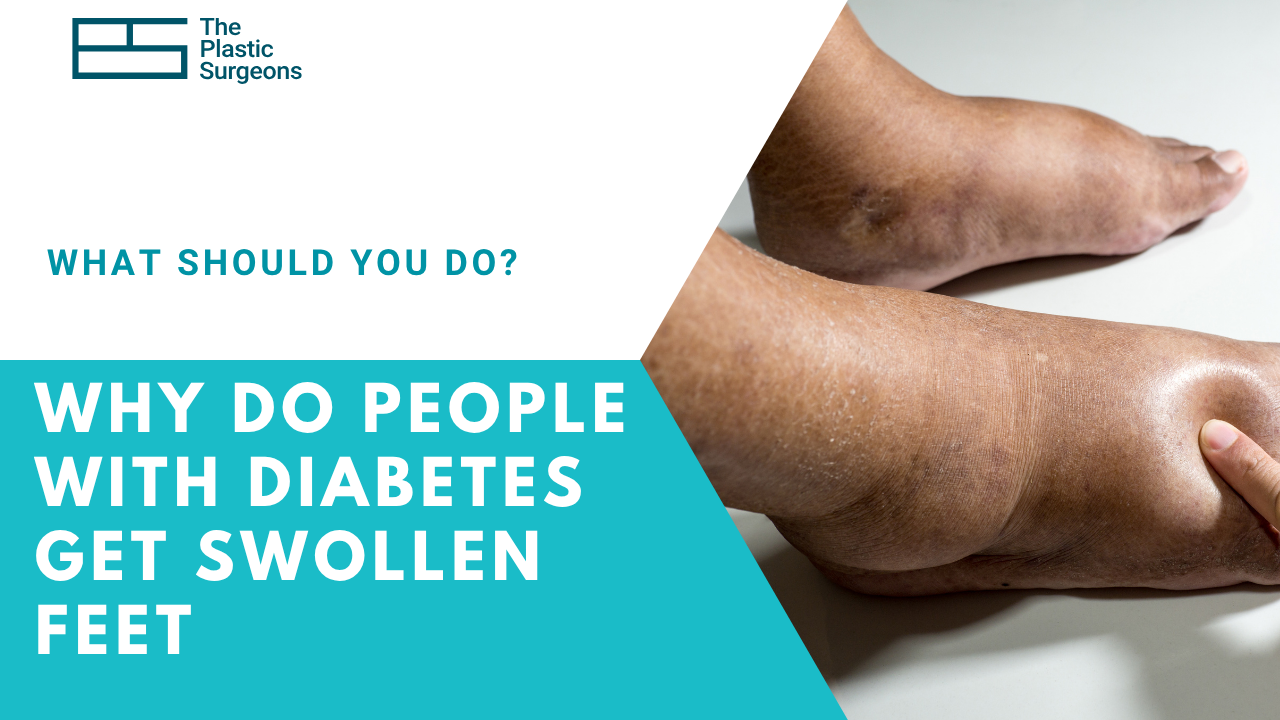
Swollen feet can be uncomfortable, but in a person with diabetes, new or persistent swelling should not automatically be dismissed as a minor problem. Diabetes and swollen feet can be connected in several ways, including nerve damage, circulation problems, infection, injury, fluid retention and, in some cases, Charcot foot.
The cause of swelling matters because some forms may improve with simple measures, while others require prompt medical evaluation. For example, swelling accompanied by redness, warmth, a wound or fever may indicate infection, while sudden swelling in one leg can have a different and potentially urgent cause.
If you have diabetes and notice new, persistent or unexplained swelling in your feet or ankles, it is important to have the cause assessed rather than assuming that diabetes itself is responsible.
What Does Foot Swelling Mean?
Foot swelling, medically called edema, occurs when excess fluid accumulates in the tissues.
Swelling may affect:
- One foot
- Both feet
- The ankles
- The lower legs
The pattern can provide useful clues.
For example, swelling in both feet after prolonged standing may have a different cause from sudden swelling of one foot accompanied by redness and warmth.
However, appearance alone cannot reliably identify the cause. A medical assessment may be needed, particularly when swelling is new or associated with other symptoms.
Why Do People With Diabetes Get Swollen Feet?
There is no single explanation for swollen feet in people with diabetes. Several conditions can cause or contribute to swelling.
1. Diabetic Neuropathy
One of the important complications of diabetes is peripheral neuropathy, which occurs when nerves in the feet and legs become damaged.
Neuropathy commonly causes symptoms such as:
- Numbness
- Tingling
- Burning
- Pain
- Reduced sensation
- Weakness
NIDDK also lists swollen feet among possible symptoms associated with peripheral neuropathy.
Neuropathy can also have an indirect effect.
When sensation is reduced, you may not notice:
- A blister
- A cut
- A pressure injury
- A minor fracture
- An injury caused by footwear
You may continue walking on the affected foot, allowing the problem to become worse.
This is particularly important because a person with diabetic neuropathy may have a significant foot problem without experiencing severe pain.
2. Charcot Foot
One of the more important causes of swelling in a person with diabetes is Charcot neuro-osteoarthropathy, commonly called Charcot foot.
It is a relatively uncommon but serious complication associated with neuropathy.
Charcot foot can begin with:
- Swelling
- Warmth
- Redness
- Changes in foot shape
Because sensation may be reduced, a person may not realize that there has been significant injury to the bones and joints.
NIDDK notes that Charcot foot may initially present with redness, warmth and swelling and can later cause changes in the shape of the foot.
Why is Charcot foot important?
Continuing to put weight on an affected foot can contribute to further structural damage.
Over time, the bones and joints may change position, resulting in a deformity.
If you have diabetes and suddenly develop a warm, red and swollen foot, particularly when sensation is reduced, seek medical assessment promptly.
3. Infection
A diabetic foot infection can cause swelling around a wound or throughout part of the foot.
Possible signs include:
- Swelling
- Redness
- Increased warmth
- Tenderness
- Pus or drainage
- Foul odour
- Skin breakdown
- Fever or chills
A wound may be present even if you do not remember injuring your foot.
This is another reason daily foot inspection is important for people with diabetes.
Clinical guidelines recognize local swelling, redness, warmth and purulent discharge among signs that can indicate diabetic foot infection, while also emphasizing that other conditions can mimic infection.
When is infection more concerning?
Seek prompt medical attention if swelling is rapidly increasing or occurs with:
- A new wound
- Spreading redness
- Pus
- Fever
- Chills
- Black or damaged tissue
- Increasing pain or tenderness
4. Poor Circulation
Diabetes can affect blood vessels and increase the risk of peripheral artery disease (PAD).
Reduced arterial blood flow can affect the health of the feet and make wounds or infections more difficult to heal.
However, swelling should not automatically be attributed to poor arterial circulation. Other vascular problems, including venous conditions, may be involved.
A doctor may therefore need to assess circulation carefully rather than assuming the cause.
5. Venous Circulation Problems
The veins in the legs help return blood toward the heart.
When venous circulation is impaired, fluid can accumulate in the lower legs and feet, leading to swelling.
Venous-related swelling may become more noticeable after:
- Long periods of standing
- Long periods of sitting
- Travel
- Limited physical activity
It may improve somewhat after resting or elevating the legs, although the appropriate management depends on the underlying cause.
If swelling is persistent, recurrent or unexplained, medical assessment is recommended.
6. Kidney Disease
Diabetes is a major cause of chronic kidney disease.
When the kidneys are not functioning properly, the body may have difficulty maintaining normal fluid and salt balance. In some circumstances, this can contribute to swelling.
Kidney-related swelling may affect more than just the feet and ankles.
If swelling is accompanied by other symptoms or you already have kidney disease, discuss it with your healthcare professional.
7. Heart-Related Fluid Retention
Some heart conditions can cause fluid to accumulate in the lower limbs.
Swelling associated with heart problems may occur alongside symptoms such as:
- Breathlessness
- Reduced exercise tolerance
- Fatigue
- Difficulty breathing when lying down
- Rapid weight gain from fluid retention
If foot or leg swelling occurs together with shortness of breath or chest symptoms, urgent medical assessment may be necessary.
8. Liver Disease
Certain liver conditions can contribute to fluid accumulation in the body.
Although liver disease is not the most common explanation for swollen feet in a person with diabetes, it is one of the conditions doctors may consider when swelling is persistent or generalized.
9. Medication Side Effects
Some medications can contribute to swelling in the legs or feet.
If swelling begins after starting or changing a medication, tell your doctor.
Do not stop prescribed medication on your own.
Your healthcare professional can determine whether the medicine could be contributing and whether an alternative treatment is appropriate.
10. Injury or Fracture
A person with diabetic neuropathy may injure the foot without realizing it.
For example, a minor fracture, sprain or soft-tissue injury may cause:
- Swelling
- Warmth
- Bruising
- Changes in the way you walk
Because sensation may be reduced, there may be surprisingly little pain.
Any unexplained swelling after a possible injury should therefore be evaluated.
11. Prolonged Sitting or Standing
Not every episode of foot swelling is caused by a serious medical condition.
Standing or sitting for long periods can cause temporary fluid accumulation in the feet and ankles.
This may be more noticeable:
- At the end of the day
- During long journeys
- After prolonged standing
- During periods of reduced physical activity
If the swelling repeatedly occurs or does not settle, however, it should not simply be attributed to standing or sitting without considering other possible causes.
12. Blood Clot
A blood clot in a deep vein, known as deep vein thrombosis (DVT), can cause swelling, usually affecting one leg.
Possible symptoms include:
- Sudden swelling
- Calf pain or tenderness
- Warmth
- Redness or discoloration
A suspected blood clot requires urgent medical evaluation.
If leg swelling is accompanied by chest pain, sudden shortness of breath, coughing blood or severe breathing difficulty, seek emergency medical care.
Is Swelling in Both Feet Different From Swelling in One Foot?
The pattern of swelling can provide useful information, although it cannot establish a diagnosis by itself.
Both feet swollen
Possible causes include:
- Prolonged standing or sitting
- Venous problems
- Fluid retention
- Medication effects
- Certain heart, kidney or liver conditions
One foot swollen
Possible causes include:
- Injury
- Infection
- Charcot foot
- Local inflammation
- Blood clot in certain circumstances
A newly swollen single foot in a person with diabetes deserves particular attention, especially if it is warm, red or associated with a wound.
How Can You Tell If Diabetic Foot Swelling Is Serious?
Swelling should be assessed more urgently when it occurs together with other changes.
Warning signs include:
- Redness
- Increased warmth
- A new wound
- Pus or drainage
- Bad odour
- Fever
- Chills
- Black or darkened skin
- Sudden swelling
- Rapidly increasing swelling
- Severe tenderness
- A change in foot shape
- A foot that is noticeably warmer than the other
- Difficulty walking
- New numbness or loss of sensation
Do not rely on pain alone. Diabetic neuropathy can reduce sensation and mask potentially important foot problems.
Why Is a Warm, Red and Swollen Foot Important in Diabetes?
A warm, red and swollen foot can have several possible causes, including infection, injury or Charcot foot.
This is important because these conditions require different treatments.
For example:
Infection may require antimicrobial treatment and wound management.
Charcot foot may require urgent offloading and specialist management to protect the bones and joints.
Injury or fracture may require immobilization or other orthopedic treatment.
Therefore, do not assume that every warm, red and swollen diabetic foot is an infection—or that every swollen foot is simply due to fluid retention.
A proper examination is important.
What Should You Do If Your Feet Become Swollen?
If you develop new or persistent swelling:
1. Inspect Your Feet
Look carefully for:
- Cuts
- Blisters
- Redness
- Drainage
- Colour changes
- Calluses
- Changes in shape
If you cannot see the sole of your foot, use a mirror or ask someone to help.
2. Avoid Tight Footwear
Swollen feet can make shoes tighter, increasing pressure and friction.
Choose footwear that does not compress the foot.
3. Avoid Walking on a Painful or Unusually Warm Foot
If the foot is suddenly swollen, warm or structurally different, avoid unnecessary weight-bearing until you have been assessed, particularly if Charcot foot is a possibility.
4. Do Not Massage a Suddenly Swollen Painful Leg
If swelling develops suddenly, particularly in one leg, a blood clot may need to be excluded. Do not assume that massage is appropriate before the cause is known.
5. Seek Medical Assessment
Persistent, unexplained or new swelling should be evaluated.
The appropriate treatment depends entirely on the underlying cause.
How Is the Cause of Swollen Feet Diagnosed?
A doctor may begin with a detailed history and physical examination.
They may ask:
- When did the swelling begin?
- Is it one foot or both?
- Does it change during the day?
- Is there pain?
- Is the foot warm?
- Is there a wound?
- Have you recently been injured?
- Have you started a new medication?
- Do you have kidney, heart or vascular disease?
- Do you have numbness or reduced sensation?
The examination may include assessment of:
- Skin
- Temperature
- Foot shape
- Pulses
- Sensation
- Wounds
- Swelling
- Mobility
Depending on the findings, additional tests may be needed.
What Tests May Be Needed?
The tests depend on the suspected cause.
Possible investigations may include:
Blood tests
These may help assess infection, kidney function or other medical conditions.
Vascular testing
If circulation is a concern, your doctor may assess arterial blood flow.
Ultrasound
Ultrasound may be useful in selected situations, including evaluation for a suspected venous blood clot.
X-ray
An X-ray may be considered when injury, fracture or structural changes are suspected.
MRI
MRI may be recommended in selected cases when deeper infection or other soft-tissue or bone problems need further evaluation.
The goal is not to perform every test on every patient, but to identify the most likely cause of the swelling.
Can Swollen Feet Be Prevented in Diabetes?
Not every cause of swelling can be prevented, but good diabetes and foot care can reduce some risks.
Check Your Feet Every Day
Look for swelling, redness, warmth, wounds and changes in shape.
Daily inspection is especially important if you have neuropathy.
Wear Appropriate Footwear
Shoes should fit comfortably and should not create pressure points.
Avoid Walking Barefoot if You Are at Risk
Protective footwear can help reduce the risk of unnoticed injuries.
Manage Diabetes
Following your healthcare team’s recommendations for blood glucose, blood pressure and cholesterol management can help reduce diabetes-related complications.
Stay Physically Active When Appropriate
Regular physical activity can support overall cardiovascular and metabolic health, but your activity should be appropriate for your medical condition and foot health.
If you have an active foot wound, Charcot foot or another significant foot problem, ask your healthcare professional what activity is safe.
Attend Regular Foot Examinations
Professional examinations can identify neuropathy, circulation problems, deformities and other risks before they lead to more serious complications.
Can Swollen Feet Lead to Diabetic Foot Ulcers?
Swelling itself does not automatically cause an ulcer.
However, swollen feet may be more vulnerable to:
- Pressure from footwear
- Friction
- Skin breakdown
- Difficulty fitting shoes properly
If swelling occurs together with neuropathy, reduced circulation or a foot deformity, the overall risk of foot complications may be higher.
This makes daily inspection particularly important.
What Is the Connection Between Swelling and Diabetic Foot Wounds?
A swollen foot with an open wound requires particular attention.
Swelling may occur because of:
- Infection
- Inflammation
- Injury
- Venous problems
- Other medical conditions
If a wound is present, doctors may need to determine whether the swelling is part of the wound problem or whether another condition is contributing.
Do not assume that swelling around a diabetic wound is normal.
When Is Reconstructive Surgery Considered?
Swelling alone generally does not mean that reconstructive surgery is needed.
However, some people with diabetes develop complex foot wounds that result in significant loss of skin and soft tissue.
In selected cases, reconstructive surgery may be considered after the underlying causes—such as infection, inadequate blood flow and pressure—have been addressed.
Depending on the wound, reconstruction may involve:
- Skin grafting
- Local tissue rearrangement
- Regional flap reconstruction
- Microsurgical free-flap reconstruction in selected complex wounds
The aim is to provide durable tissue coverage while preserving as much function as possible.
Reconstructive surgery is therefore usually part of a broader multidisciplinary approach rather than a treatment for swelling itself.
When Should You Seek Urgent Medical Care?
Seek urgent medical assessment if your swollen foot or leg is accompanied by:
- Sudden one-sided swelling
- Severe calf pain
- Chest pain
- Shortness of breath
- Rapidly spreading redness
- Fever or chills
- Pus or significant drainage
- Black or dead-looking tissue
- A suddenly warm, red and swollen foot
- A new change in foot shape
- Severe or rapidly worsening symptoms
A suddenly swollen leg may have a vascular cause, while a warm, red and swollen diabetic foot may require assessment for infection or Charcot foot.
Frequently Asked Questions
Why do people with diabetes get swollen feet?
Diabetes can be associated with several conditions that cause or contribute to swelling, including peripheral neuropathy, Charcot foot, infection, venous problems, kidney or heart disease, medication effects and injury. Not every case of swelling has the same cause.
Is swollen feet a sign of diabetes?
Swollen feet are not a specific sign of diabetes. Many conditions can cause foot or ankle swelling. However, people who already have diabetes may develop swelling because of diabetes-related complications or other medical conditions.
Is swelling in one foot more serious than swelling in both feet?
Sudden swelling in one foot or leg can require more urgent evaluation because causes such as injury, infection, Charcot foot or a blood clot may need to be considered. The pattern alone cannot establish the diagnosis.
Can diabetic neuropathy cause swollen feet?
Yes. NIDDK lists swollen feet among possible symptoms associated with peripheral neuropathy. Neuropathy can also contribute indirectly by allowing injuries to go unnoticed.
Is a warm, red and swollen foot an emergency in diabetes?
It can require prompt assessment. Infection and Charcot foot are among the conditions that may cause these symptoms, and they require different management. Do not wait for severe pain, especially if you have reduced sensation.
Should I elevate swollen feet if I have diabetes?
Elevation may help some forms of dependent swelling, but it is not an appropriate treatment for every cause. If the swelling is new, persistent, one-sided, painful or associated with a wound, seek medical advice rather than relying solely on elevation.
Can swollen feet cause diabetic foot ulcers?
Swelling itself does not necessarily cause ulcers, but swollen feet can create footwear and pressure problems. If neuropathy or other risk factors are also present, careful foot monitoring becomes particularly important.
Should I massage swollen feet?
Do not automatically massage a suddenly swollen or painful foot or leg. A blood clot, infection, injury or another condition may need to be excluded first.
For clinical information, visit our diabetic foot treatment page, review lower-limb reconstruction, or contact the clinic.
Swollen Feet and Diabetic Foot Care in Mumbai
Swollen feet in a person with diabetes should be assessed based on the pattern of swelling and the symptoms that accompany it. A careful evaluation can help distinguish between fluid retention, venous problems, infection, injury, Charcot foot and other causes.
Dr. Vinay Jacob, MS, MCh, DNB, is a plastic and reconstructive surgeon with experience in microsurgery and lower-limb reconstruction. When swelling is associated with a complex diabetic foot wound and significant tissue loss, reconstructive surgery may be considered as part of multidisciplinary limb-preservation care.
The treatment depends on the underlying cause. Swelling alone does not automatically require surgery, and an examination is necessary before deciding on an appropriate treatment plan.
Takeaway
So, why do people with diabetes get swollen feet? The answer can range from relatively simple causes such as prolonged standing to more important conditions such as infection, neuropathy, Charcot foot, vascular disease or fluid retention related to other medical conditions.
The key is not to assume that all swelling is caused by diabetes itself.
If your feet become newly swollen, especially if one foot is warm, red, painful or changing shape, or if swelling is accompanied by a wound, fever or other concerning symptoms, seek medical evaluation promptly.
Regular foot checks, appropriate footwear, good diabetes management and professional foot examinations can help identify problems early and reduce the risk of serious diabetic foot complications.
Sources: NIDDK: Diabetes & Foot Problems, American Diabetes Association: Foot Complications, and CDC: Preventing Diabetes-Related Amputations.
Disclaimer: This article is intended for general educational purposes and does not replace an in-person medical examination, diagnosis or personalized medical advice. New, persistent or unexplained swelling should be evaluated by a qualified healthcare professional.