Written and medically reviewed by Dr. Vinay Jacob, MS, MCh, DNB
Member, Rhinoplasty Society of India (RSI)
Medical review: August 5, 2026 | Last updated: August 13, 2026 | Editorial policy
Rhinoplasty, commonly known as a nose job, is one of the most popular facial cosmetic procedures worldwide. Whether you want to improve the appearance of your nose, correct a previous injury, or address breathing difficulties, rhinoplasty can enhance both aesthetics and function.
One of the most common questions patients ask during their consultation is, “Should I choose open rhinoplasty or closed rhinoplasty?” While both techniques aim to reshape the nose and deliver natural-looking results, they differ in their surgical approach, visibility during surgery, recovery, and the types of nasal concerns they can address.
If you’re considering Rhinoplasty Surgery in Mumbai, understanding these two techniques will help you make an informed decision. The most suitable approach ultimately depends on your nasal anatomy, cosmetic goals, and the complexity of the procedure.
What Is Rhinoplasty?
Rhinoplasty is a surgical procedure that reshapes the nose to improve its appearance, function, or both. It can correct concerns such as:
- A prominent nasal hump
- A wide or bulbous nasal tip
- A crooked nose
- A deviated septum
- Nasal asymmetry
- A drooping nasal tip
- Congenital nasal deformities
- Breathing difficulties caused by structural abnormalities
Every rhinoplasty procedure is customized according to the patient’s facial proportions and desired outcome.
Understanding Open Rhinoplasty
Open rhinoplasty involves making a small incision across the columella—the strip of skin between the nostrils—along with incisions inside the nostrils.
Once the incision is made, the surgeon gently lifts the nasal skin to gain a clear view of the underlying bone and cartilage.
This approach provides excellent visibility, allowing precise reshaping of the nose.
Advantages of Open Rhinoplasty
Better Surgical Visibility
The open approach allows the surgeon to clearly visualize the nasal structures, making it easier to perform detailed corrections.
Ideal for Complex Cases
Open rhinoplasty is often recommended for patients who require:
- Significant nasal reshaping
- Revision rhinoplasty
- Correction of severe asymmetry
- Major tip reconstruction
- Structural grafting
Greater Precision
Because the surgeon has direct access to the nasal framework, precise modifications can be made with greater accuracy.
Improved Symmetry
Open rhinoplasty is particularly beneficial when correcting complex deformities that require careful balancing of both sides of the nose.
Possible Limitations of Open Rhinoplasty
Although highly effective, open rhinoplasty has a few considerations.
- A tiny scar remains on the columella, although it usually fades significantly over time.
- Swelling around the nasal tip may last slightly longer compared to closed rhinoplasty.
- Recovery can be marginally longer in some patients.
When performed by an experienced plastic surgeon, the external scar is typically very discreet and difficult to notice.
Understanding Closed Rhinoplasty
Closed rhinoplasty, also known as endonasal rhinoplasty, is performed entirely through incisions inside the nostrils.
Since there are no external incisions, the skin is not lifted away from the nasal framework in the same way as open rhinoplasty.
Instead, the surgeon reshapes the bone and cartilage through internal access points.
Advantages of Closed Rhinoplasty

No External Scar
One of the biggest advantages is that all incisions remain inside the nose, leaving no visible external scar.
Less Tissue Disruption
Because the nasal skin is not fully lifted, tissue trauma may be slightly reduced.
Potentially Faster Recovery
Some patients experience:
- Less swelling
- Faster healing
- Earlier return to normal activities
However, recovery varies depending on the extent of the surgery rather than the technique alone.
Suitable for Minor Corrections
Closed rhinoplasty is often appropriate for patients seeking:
- Small hump reduction
- Minor bridge refinement
- Subtle nasal contour improvements
- Straightforward cosmetic adjustments
Possible Limitations of Closed Rhinoplasty
Closed rhinoplasty may not be the best option for every patient.
Because visibility is more limited, it can be challenging in cases involving:
- Complex structural changes
- Major tip reshaping
- Severe asymmetry
- Revision surgery
In these situations, open rhinoplasty often provides greater surgical control.
Open vs Closed Rhinoplasty: Key Differences
| Feature | Open Rhinoplasty | Closed Rhinoplasty |
| Incisions | Inside the nostrils and across the columella | Inside the nostrils only |
| External Scar | Small scar on the columella | No visible external scar |
| Surgical Visibility | Excellent | Limited |
| Best For | Complex and revision cases | Mild to moderate corrections |
| Tip Reshaping | Highly effective | Suitable for selected cases |
| Recovery | Slightly longer tip swelling | May have slightly quicker recovery |
Which Technique Produces Better Results?
There is no universal “better” technique.
The success of rhinoplasty depends on:
- The patient’s anatomy
- The complexity of the correction
- The surgeon’s expertise
- The desired outcome
For straightforward cosmetic refinements, closed rhinoplasty may provide excellent results.
For more advanced reshaping or reconstructive work, open rhinoplasty often offers greater precision.
Which Technique Is Better for Cosmetic Rhinoplasty?
If your goal is to improve:
- A small dorsal hump
- Mild asymmetry
- Overall nasal refinement
Closed rhinoplasty may be sufficient.
However, if your procedure requires:
- Significant tip refinement
- Structural grafting
- Major reshaping
- Complex contour correction
Open rhinoplasty is often the preferred option.
Which Technique Is Better for Functional Rhinoplasty?
Patients seeking improved breathing due to:
- Deviated septum
- Nasal valve collapse
- Previous trauma
- Internal structural abnormalities
may require more extensive correction.
In many of these cases, open rhinoplasty allows the surgeon better access to restore both function and appearance.
Recovery After Rhinoplasty
Regardless of the technique used, recovery follows a similar pattern.
First Week
Patients may experience:
- Swelling
- Bruising around the eyes
- Mild discomfort
- Nasal congestion
A nasal splint is usually removed after about one week.
Two to Four Weeks
Most bruising resolves.
Patients gradually resume normal activities while avoiding strenuous exercise.
Several Months
Although the nose begins looking much better within a few weeks, subtle swelling—especially at the nasal tip—continues to improve gradually.
Final Results
Final rhinoplasty results often become fully visible over the course of several months, as the tissues settle and refine.
Does One Technique Hurt More?
Both procedures are performed under anesthesia, so you will not feel pain during surgery.
After the procedure, most patients describe:
- Mild pressure
- Nasal congestion
- Temporary discomfort
The overall recovery experience is generally similar for both techniques and is well managed with prescribed medications.
Will There Be Visible Scars?
Open Rhinoplasty
The small incision on the columella usually heals extremely well and becomes barely noticeable over time.
Closed Rhinoplasty
Since all incisions are hidden inside the nostrils, there are no visible external scars.
In either case, scar visibility is usually minimal when surgery is performed using meticulous surgical techniques.
How Does Your Surgeon Choose the Technique?
Your surgeon will evaluate:
- Nasal shape
- Skin thickness
- Bone structure
- Cartilage strength
- Functional concerns
- Previous nasal surgery
- Cosmetic goals
Based on these factors, they will recommend the approach most likely to achieve safe, predictable, and natural-looking results.
Why Surgeon Experience Matters More Than the Technique
Patients often focus on whether open or closed rhinoplasty is “better.”
In reality, the surgeon’s expertise has a far greater influence on the outcome than the choice of technique.
An experienced plastic surgeon understands:
- Facial proportions
- Nasal anatomy
- Functional preservation
- Advanced rhinoplasty techniques
- Long-term stability of results
The best surgeons choose the technique that best suits the individual patient—not the one they use most frequently.
Choosing the Right Surgeon
If you’re considering Rhinoplasty Surgery in Mumbai, selecting an experienced plastic surgeon is one of the most important decisions you can make.
A qualified surgeon will:
- Carefully assess your facial anatomy.
- Understand your cosmetic and functional concerns.
- Explain the advantages and limitations of each technique.
- Recommend the most appropriate surgical approach.
- Create natural-looking results that complement your facial features.
A detailed consultation ensures your treatment plan is tailored specifically to your goals.
Final Thoughts
Both open and closed rhinoplasty are highly effective techniques that can deliver beautiful, natural-looking results when performed by an experienced surgeon. Neither approach is universally better—the right choice depends on the complexity of your nasal concerns, your anatomy, and your desired outcome.
Open rhinoplasty offers excellent visibility and precision for complex or revision cases, while closed rhinoplasty is ideal for selected patients seeking less extensive corrections without an external incision.
If you’re considering Rhinoplasty Surgery in Mumbai, schedule a consultation with an experienced plastic surgeon to discuss your goals and determine the most appropriate technique for your needs. With a personalized surgical plan and expert care, you can achieve a nose that looks natural, functions well, and enhances your overall facial harmony.
Why consider Dr. Vinay Jacob for this treatment?
Dr. Vinay Jacob is a senior plastic and reconstructive surgeon with MS, MCh and DNB qualifications and international training. His advanced aesthetic and maxillofacial training supports detailed facial assessment and procedure planning. He is also a member of the Rhinoplasty Society of India.
Learn more about facial plastic surgery services at The Plastic Surgeons. Read related guidance: Facelift Recovery Timeline: What to Expect Week by Week and How Long Does Swelling Last After Rhinoplasty? A Complete Recovery Timeline.
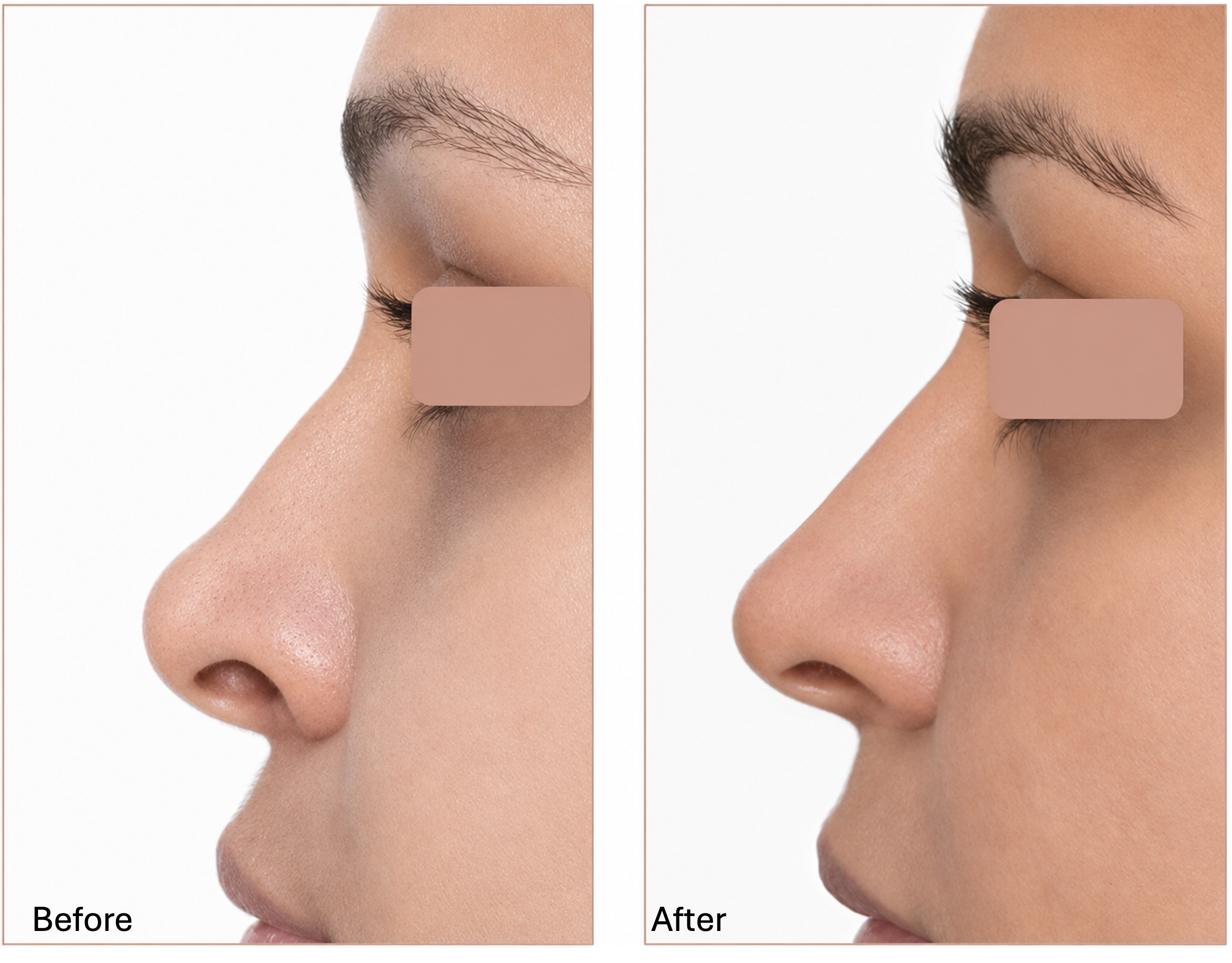
Clinical before-and-after example